How to Move Large Furniture Without Damaging Your Home
Professional techniques to protect your furniture and home during moves. Learn planning, tools, and expert tips for stress-free relocation.
Introduction
Moving large furniture — whether it’s a sofa, wardrobe, heavy dresser, or sectional — can be one of the most stressful parts of any relocation. One wrong bump, twist, or slip can cause damage to your furniture and your home — scratched floors, dented walls, chipped paint, broken door frames, or fractured edges.
With careful planning, the right tools, and proper technique, you can move heavy pieces safely and protect your home in the process. In this guide, we’ll walk you through every step: planning, preparation, execution, and finishing touches.
1. Plan & Measure Everything Before You Move
Before you start lifting, spend time planning. Skipping this step is often where damage happens.
a. Measure Furniture and Spaces
- Measure the height, width, and depth of the furniture (including protruding parts like handles or decorative trim).
- Measure doorways, corridors, stairwells, ceiling heights, and elevator openings.
- Check for tight corners, low ceilings, narrow hallways.
- If a piece doesn’t fit through a doorway in its current orientation, you’ll need to rotate, tilt, disassemble, or find alternate routes.
b. Create a Route Map
- Sketch or mentally plan the path the furniture will take from its current position to the moving truck (or new room).
- Clear obstacles: remove rugs, decor items, low furniture, potted plants, etc.
- Leave wide margins — better to have extra clearance than risk scraping walls or doors.
- Plan an order: move bulkier items first, leave lighter ones for later.
c. Protect the Route
- Lay down floor protection (cardboard, plywood sheets, floor runners) along the path.
- Tape or secure the floor protection so it doesn’t shift underfoot.
- Wrap door frames, corner edges, walls adjacent to the path with padding, foam, blankets.
Pro Tip: Use painter’s tape to secure protective materials — it’s strong enough to hold but won’t damage surfaces when removed.
2. Disassemble & Reduce Bulk Where Possible
The less bulky the item, the easier (and safer) it is to move.
- Remove detachable parts: legs, drawers, doors, shelves, knobs, and handles.
- Keep all bolts, screws, and hardware in labeled bags. Tape bags to the corresponding piece.
- If a part is very heavy, consider splitting it into smaller parts if it’s safe to do so.
- Sometimes rotating (tilting) the furniture can help it pass through tight angles, but only when safe.
Disassembling reduces both weight and awkwardness, making it less likely you’ll bump something while navigating tight spaces.
3. Gather the Right Tools & Protective Materials
Having the proper equipment is crucial to move large furniture safely and to protect both the item and the home surfaces.
Moving Blankets
Protect surfaces from scratches
Stretch Wrap
Secure loose parts
Furniture Sliders
Reduce friction on floors
Lifting Straps
Distribute weight evenly
Dollies
Roll instead of carry
Corner Protectors
Shield sharp edges
Important tip: When wrapping furniture with blankets or padding, tape or stretch wrap the blanket to itself, not directly to the furniture surface (to avoid damaging finishes).
4. Use Safe Lifting & Moving Techniques
Even with proper gear, technique matters as much — or more — to avoid damage to your home (and injury to yourself).
1 Correct Lifting Form
- Always bend at your knees (not your waist)
- Keep your back straight
- Lift with your legs, not with your back or arms
- Keep the load close to your body
- Avoid twisting while lifting
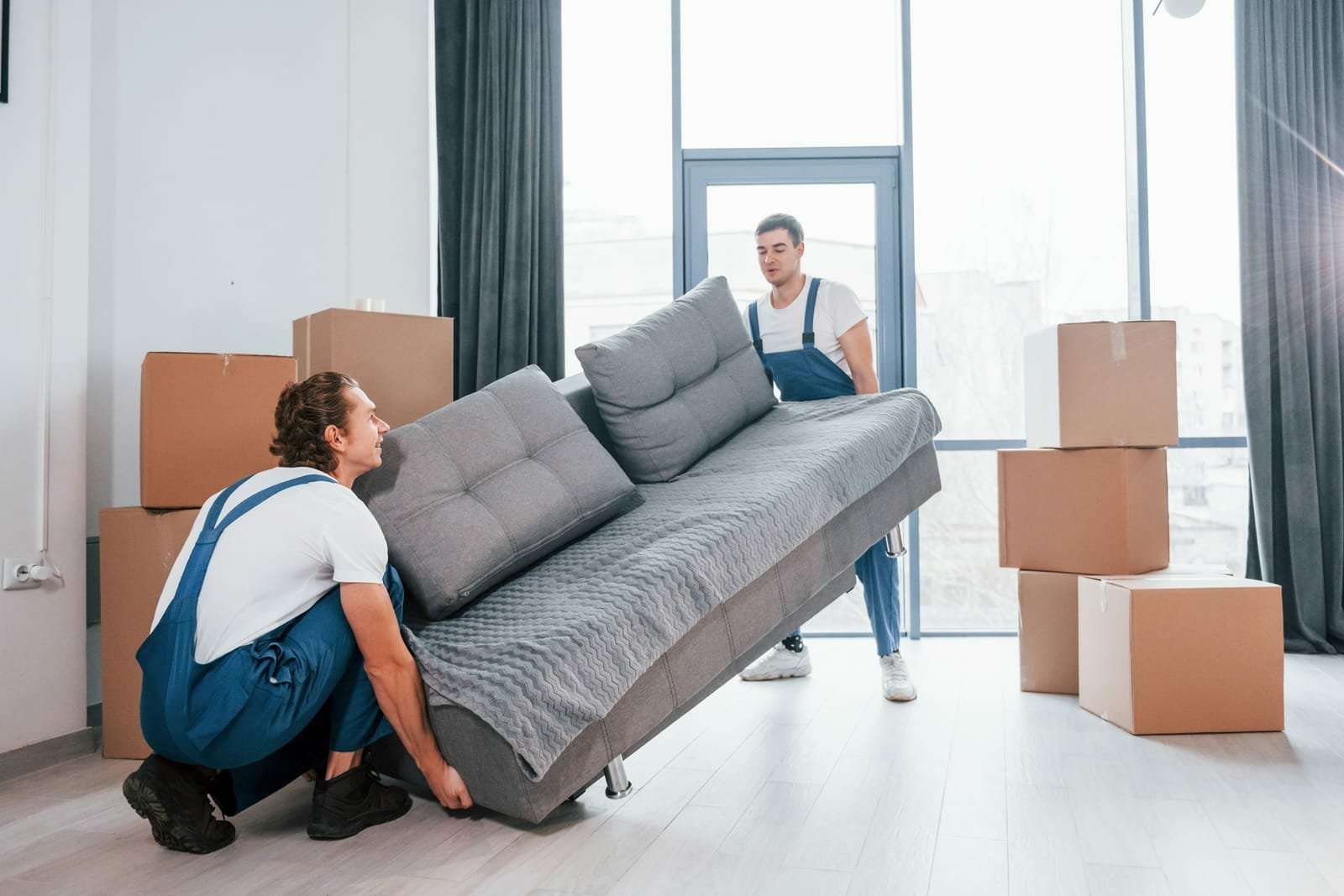
2 Coordinate With Partners
- Communicate clearly with phrases like “lift,” “lower,” “pause”
- Move slowly and steadily
- For staircases, decide who leads and who supports
- When going upstairs, have one person below and one above
3 Use Proper Equipment
- Straps help redistribute weight
- Dollies allow rolling instead of carrying
- Sliders reduce friction on floors
- Push from lower portion to avoid tipping
Safety Warning: Never attempt to move extremely heavy items alone. If you feel any strain or discomfort, stop immediately and reassess your approach.
5. Protect Floors, Walls & Door Frames
While moving, your home is vulnerable to damage. Here’s how to guard it:
Floor Protection
Corner Guards
Door Frame Padding
Edge Protectors
- Lay down floor protection (cardboard, plywood, runner) along high-traffic moving paths.
- Wrap baseboards or vulnerable edges with foam/towels/blankets.
- Pad corners, doorjambs, and walls adjacent to the path.
- Clean wheels of dollies before rolling them over floors to avoid scratches from debris.
- Avoid dragging furniture — always lift or roll.
- Use edge guards on furniture pieces so any bumping is cushioned.
- During heavy-duty moves, place cardboard sheets or sacrificial layers between furniture and floor surfaces.
If in doubt, add extra layers of protection — it’s far cheaper than repairing damage.
6. Secure Furniture During Transit
Once items leave the home, improper securing can lead to major damage.
- Use ratchet straps, bungee cords, or tie-downs to anchor heavy items
- Avoid stacking items on top of fragile or upholstered furniture
- Place heavier pieces at the bottom and lighter pieces on top
- Ensure nothing can shift or slide during transit
- Use padding or blankets between items to prevent rubbing
- Double-check tie points before departure
7. Reassembling & Placement Safely
Once you reach the destination:
- Before removing all protection, confirm the new space is ready (floors cleaned, route cleared)
- Bring out the padded path route so the furniture doesn’t scratch floor en route to final spot
- Reassemble parts in the reverse order of disassembly, taking care with screws and alignments
- Position the furniture gently — don’t drag it into place
- Remove all wrapping, check for damage, and touch up any markings
- Inspect floors, walls and furniture surfaces after placement to identify any incidental damage
8. When to Call Professionals
Sometimes the safest, most cost-effective option is to hire professionals — especially for:
- Very heavy or oversized items (pianos, large wardrobes, glass cabinets)
- Furniture that is antique, high value, or delicate
- Tight or complex routes (narrow staircases, multiple floors)
- Moves with very high risk of home damage
- Situations when you lack the tools, time, or manpower
Professionals have experience, specialized tools, insurance, and the manpower to safely move large items without risking damage to your home or property.
Conclusion
Moving large furniture without damaging your home is about planning, protection, technique, and patience. Measure everything, disassemble smartly, gather the right tools, use safe lifting methods, and protect your home surfaces at every step.
And if a piece feels too risky, rely on experts. QualityMoverz has the experience and equipment to handle your most challenging furniture moves safely and efficiently.

Leave a Reply