
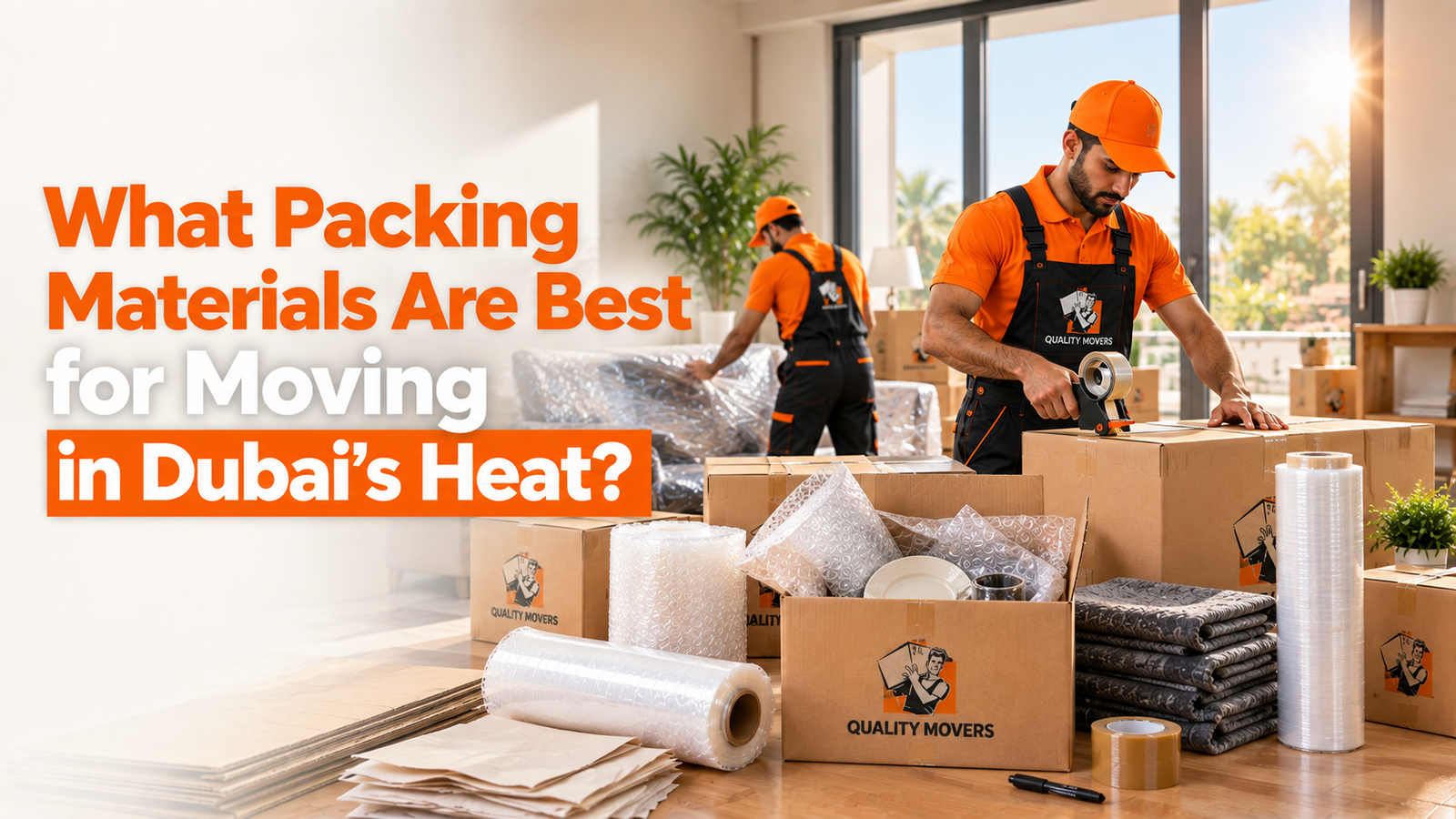
What Packing Materials Are Best for Moving in Dubai’s Heat?
The heat in Dubai can change how you prepare certain items for moving. Cardboard boxes can sit in warm loading areas, packed belongings may spend time waiting before they reach the truck, and materials that work well indoors may not be the best choice when your belongings are exposed to heat and humidity.
The concern isn’t only about the temperature outside. Weak cartons, poor quality tape, too much plastic wrapping, and inadequate cushioning can all create problems while boxes are being carried, loaded, or transported. The UAE government describes the country’s summer climate as hot and humid, so packing materials should be chosen with those conditions in mind.
Choosing the right packing materials for moving in Dubai’s heat can help keep boxes secure and belongings protected during the move. The key is using each material for the job it actually needs to do.
Which Packing Materials Are Most Important for a Dubai Move?
You don’t need a huge collection of packing supplies to prepare a home properly. A few good quality materials can cover most household belongings when they’re used correctly.
Packing material
Strong cardboard boxes
Packing paper
Bubble wrap
Foam sheets
Moving blankets
Packing tape
Stretch wrap
Corner protectors
Moisture absorbers
Main purpose
Containing and supporting belongings
Wrapping and filling gaps
Impact and surface protection
Cushioning and surface protection
Protection during handling
Securing cartons
Holding and protecting furniture
Protecting exposed edges
Managing moisture inside enclosed spaces
Best used for
Clothing, books, kitchenware, household items
Glassware, dishes, décor
Fragile items, electronics, glass
Screens, glass, furniture edges
Sofas, cabinets, tables, appliances
Sealing boxes
Drawers, doors, upholstered pieces
Mirrors, framed artwork, furniture
Selected sensitive belongings
The right combination depends on what’s going in the box. A carton of clothes doesn’t need the same protection as a television, a glass table, or a shelf of ceramics.
Are Strong Cardboard Boxes Important in Dubai's Heat
The box is the outer layer protecting everything inside, so its condition matters before you even start packing.Choose cartons that are clean, dry, sturdy, and suitable for the weight you plan to put inside them. Double-walled cartons can provide greater resistance to punctures, crushing, and impact than single-walled boxes, according to U-Haul’s current box guidance.
Don’t rely on a box just because it looks fine at first glance. A carton that’s already crushed, damp, torn, or soft around the corners isn’t a good choice for heavy belongings.
Keep packed cartons indoors in an air-conditioned or otherwise protected area until they’re ready to be moved. There’s no benefit in leaving your finished boxes sitting outside unnecessarily.
Is Packing Paper Better Than Bubble Wrap for Dubai Moves?
Packing paper and bubble wrap have different jobs, so one isn’t a complete replacement for the other.
Packing Paper for Wrapping and Filling
Packing paper works well for wrapping dishes, glassware, ornaments, kitchen items, and other household belongings. It can also be crumpled and used to fill empty spaces inside cartons.
Packing paper has an advantage in humid conditions because it is breathable. U-Pack specifically recommends packing paper over bubble wrap in some humid moving situations to reduce the chance of moisture buildup.
Bubble Wrap for Impact Protection
Bubble wrap earns its place when an item needs cushioning against knocks, not just a protective wrap. It works well for electronics, glassware, artwork, and home décor.
The common mistake is treating bubble wrap as the only layer an item needs. Without enough cushioning around it, a wrapped item can still shift and knock against the sides of the box during transport.
When Should You Use Foam Sheets for Moving?
Foam is useful for belongings that need a soft protective layer without adding much weight. Use foam sheets around smooth surfaces, screens, glass panels, polished furniture, and delicate finishes where direct contact with other items could cause scratches.
Foam can also help protect corners and edges when combined with other packing materials. Don’t use a thin foam sheet as the only protection for a heavy or highly fragile it
Are Moving Blankets Useful in Dubai's Heat?
Moving blankets are mainly used to protect larger belongings during carrying, loading, and transport.They can be placed around sofas, cabinets, tables, appliances, wooden furniture, and other large pieces to reduce scratches, scuffs, and contact damage. U-Haul describes moving blankets or furniture pads as versatile protection for moving and storage.
They also provide a useful barrier when several pieces need to be moved through corridors, lifts, and loading areas.
Don’t leave furniture wrapped and sitting outdoors for longer than necessary. The goal is to protect the item during handling, not create unnecessary exposure to heat.
What Type of Packing Tape Works Best in Hot Conditions?
Tape seems like a minor detail until a sealed carton pops open halfway through the move. Stick to proper packing or packaging tape made for cardboard. Masking tape, electrical tape, and similar household alternatives peel away far more easily, especially once heat or humidity gets to the adhesive. Old tape that’s been sitting in a hot storeroom for months won’t hold as well as a fresh roll applied to clean, dry cardboard.
Store unused tape indoors rather than leaving rolls in a hot car or an uncovered storage area.
Should You Use Stretch Wrap for Furniture During a Dubai Move?
Stretch wrap can be useful for holding drawers and doors closed and keeping furniture surfaces protected during handling.It’s especially helpful for cabinets, wardrobes, upholstered furniture, and pieces with detachable parts that need to stay together while being carried.
Furniture should be completely dry before it goes anywhere near stretch wrap. Plastic traps moisture against a surface, so wrapping something damp can do more harm than leaving it unwrapped. It’s also worth remembering that stretch wrap isn’t padding. For furniture you actually care about, add a protective layer first and use the wrap mainly to hold that layer in place.
What Packing Materials Protect Glass and Fragile Belongings?
Fragile items need a combination of wrapping and cushioning, not one material working alone. Wrap the piece individually in packing paper, add bubble wrap or foam for impact protection, then fill the remaining space in the carton so nothing can shift during the drive.
For mirrors, framed artwork, and large glass pieces, corner protection is particularly useful because exposed edges are vulnerable during carrying.
Which Materials Should You Use for Electronics?
Electronics need protection from impact, dust, and unnecessary heat exposure.
Original Packaging
Hold onto the original box and molded inserts if you still have them. They’re built around the exact shape of the device and usually offer better support than anything improvised.
Foam and Bubble Protection
For electronics without their original packaging, use suitable cushioning around the device and protect screens and exposed surfaces from direct contact.
Timing Matters as Much as the Material
No amount of padding makes an electronics box immune to a hot car boot or a sun-exposed loading dock. Keep packed electronics indoors until the truck is ready to load, and get them into an air-conditioned space as soon as they arrive.
Are Plastic Storage Bins Better Than Cardboard Boxes for a Dubai Move?
Plastic bins have their place, but they’re not a blanket upgrade over cardboard. Rigid bins resist crushing well and suit items that need a tougher container. The trade-off is that a sealed plastic bin holds in moisture the same way a sealed bag does, which can be a problem in a humid climate.
Use bins selectively, for items where the crush resistance matters more than the moisture risk. Cardboard remains the better default for most household boxes.
Do You Need Moisture Absorbers in Moving Boxes?
Moisture absorbers can be useful for selected sensitive belongings when they’re packed in enclosed containers for an extended period.
They can be particularly relevant when belongings will spend additional time in storage rather than going directly into an air-conditioned home. The purpose is to manage moisture inside the container, not to replace good packing materials.
Don’t place moisture absorbers directly against delicate items. Follow the product’s instructions and use them only where they make sense for the belongings being stored.
How Do You Combine Materials for Different Types of Items?
Each material earns its place by doing one job well, and most items need more than one working together.
A glass item might get wrapped in packing paper, cushioned with bubble wrap, placed in a sturdy carton, and packed tight with void fill so it can’t move. A wooden cabinet, on the other hand, is better served by furniture padding and stretch wrap than by any cardboard box. Clothing and linens sit at the opposite end. They rarely need cushioning at all, just a clean, dry container to keep them contained.
Buying more materials doesn’t automatically mean better protection. What matters is matching the material to the item’s weight, shape, and how rough the handling is likely to be. That also means skipping shortcuts: an overloaded carton isn’t safer just because it’s wrapped in extra tape, and a “fragile” label on the outside does nothing to replace real cushioning on the inside.
How Should You Store and Handle Packing Materials During a Dubai Move?
Where you keep your materials, before and after packing, affects how well they hold up.
Store unused cardboard, packing paper, and tape indoors rather than in a hot garage or storeroom. Once boxes are packed, keep them in a clean, dry space away from direct sunlight until moving day, rather than staged on a balcony or left in a parking area for hours. During loading, move completed cartons straight into the truck instead of letting them sit outside in the sun while the rest of the load gets ready.
This one habit protects the packing work you’ve already put in. A well-wrapped item can still be damaged by a few hours in a hot, humid stairwell before it ever reaches the truck.
When Is Professional Packing Worth Considering?
Packing your own home works fine when you have enough time, a manageable amount to pack, and the right materials on hand.
Professional packing starts to make more sense once fragile items, expensive electronics, large artwork, or glass furniture are involved, or when the move needs to happen within a tight window. A professional team also shows up with the right materials for each type of item, rather than reaching for the same box and roll of tape for everything in the house.
Frequently Asked Questions
Most professional movers bring their own boxes, wrap, and padding as part of the service, though it’s worth confirming what’s included before booking, since some quotes price materials separately from labor.
A one-bedroom apartment typically needs 15 to 25 boxes plus a roll or two of tape and enough paper or bubble wrap for the kitchen and any fragile décor. Larger homes with more furniture will need moving blankets and stretch wrap on top of that.
Candles, wax products, and some cosmetics deserve their own box kept out of hot vehicles and storage areas during summer, since they can soften or melt well before the rest of a shipment is affected.
Plastic bags work fine for soft items like linens or clothing, but they don’t hold up as a substitute for sturdy cartons and real cushioning around anything fragile or heavy.
Moving earlier in the day cuts down how long belongings sit in peak heat, though building access hours and lift bookings often decide the schedule more than temperature does. Whatever time you move, the materials still need to match what’s being packed.
Get Professional Packing Help in Dubai
Good materials only go as far as the packing skill behind them. A box can be full of the right supplies and still let an item shift, crack, or take on moisture if it wasn’t packed with any real technique.
That’s where an experienced packing team earns its keep. Quality Movers handles packing jobs across Dubai every week, with the right approach for fragile items, household belongings, and office equipment. Our crews know which materials to reach for depending on what’s going in the box and how long it needs to sit before the truck arrives.
Get in touch with Quality Movers and discuss your packing requirements with our team.
